You’ve figured out your home has hard water. Maybe the signs are obvious — crusty white buildup on faucets, dry skin after showers, appliances that seem to age in dog years. Or maybe you just started Googling because your plumber gave you a look like “you really should fix this.”
Now you’re staring down two options:
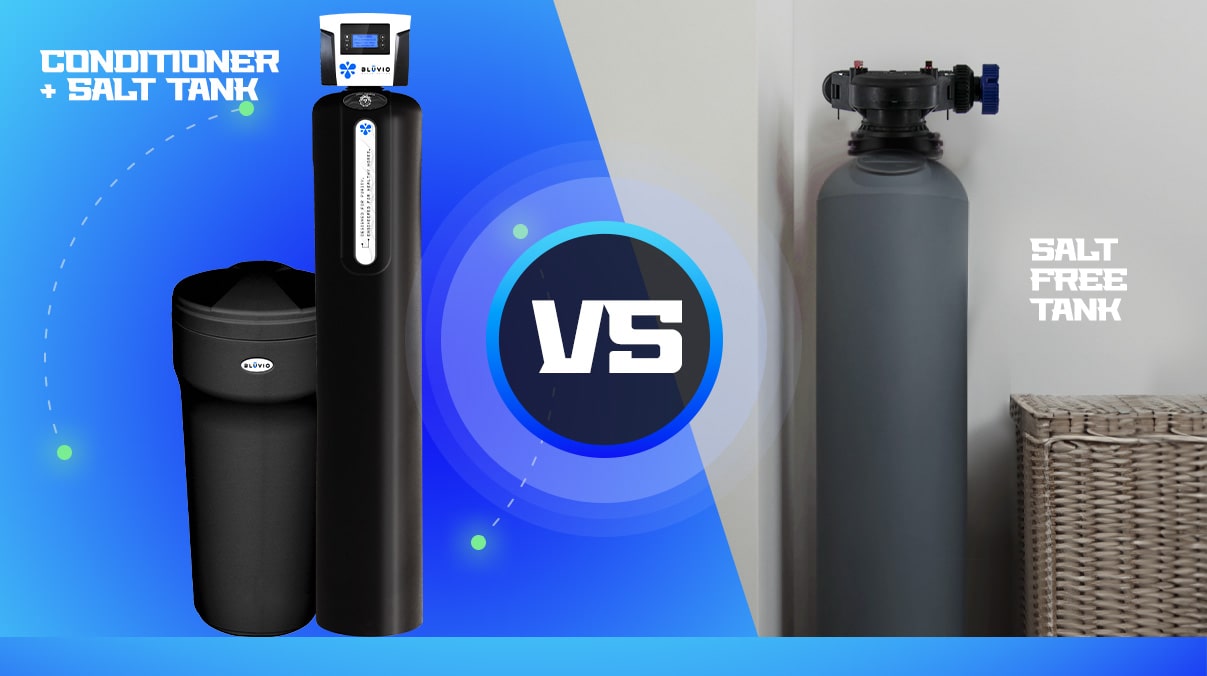
Salt-based water softeners, the long-standing standard — or salt-free systems, the shiny new alternative promising zero salt, zero hassle.
They both claim to solve your hard water problem. But here’s the twist most companies won’t tell you:
Only one of them actually removes the minerals causing the issue.
This article breaks down what each system does, how they work, and what kind of results you can really expect — so you can make an informed decision that doesn’t just sound good on paper, but actually performs in your home.
What’s the Actual Problem With Hard Water?
Hard water is loaded with dissolved minerals — mostly calcium and magnesium — that create problems throughout the home.
Hard water is loaded with dissolved minerals — mostly calcium and magnesium — that create scale deposits in pipes, reduce the efficiency of water heaters, leave streaks on dishes, and dry out your skin and hair.
And while it won’t poison you, it will wreck your appliances, shrink your water pressure over time, and cost you money.
“But calcium and magnesium are good for you, right?”
Well… not exactly. Here’s something most people don’t realize:
the calcium and magnesium in tap water are not the same bioavailable nutrients your body gets from food.
These are inorganic mineral ions picked up from rocks, pipes, and municipal infrastructure — not the organic, nutrient-bound forms your body can efficiently absorb. In other words:
The minerals in hard water cause scale
The minerals in food cause nutrition
Two very different things.
Hard water isn’t dangerous…
it’s just hard on your home, your skin, and your wallet — and it doesn’t count as a daily mineral supplement.
How Salt-Based Softeners Work
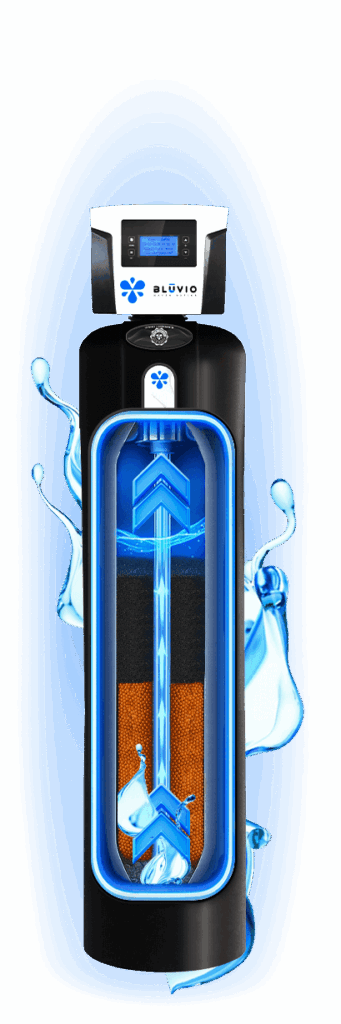
Salt-based systems use ion exchange to physically remove the minerals responsible for hard water.
Salt-based systems use ion exchange, a tried-and-true process that physically removes calcium and magnesium from your water. They replace those minerals with small amounts of sodium or potassium, rendering the water “soft.”
What this means for you:
- No more scale buildup
- Better soap lathering
- Less detergent and cleaning product use
- Longer-lasting appliances
It’s like clearing out the problem entirely — not just negotiating with it.
How Salt-Free Systems Work
Salt-free systems take a fundamentally different approach: the hardness minerals remain in the water.
Salt-free systems are often called “conditioners” or “descalers.” Rather than removing hardness minerals, they attempt to change the structure of those minerals so they don’t cling to surfaces as easily.
The method varies by manufacturer — some use template-assisted crystallization (TAC), others use magnets or electric pulses — but the bottom line is the same:
The minerals stay in the water. The system just hopes they’ll behave better.
Sometimes they do. Sometimes they don’t. Performance depends on your specific water chemistry, pressure, temperature, and flow rates.
Side-by-Side Comparison
Here’s how salt-based and salt-free systems compare across the things homeowners actually notice.
| Feature | Salt-Based System | Salt-Free System |
|---|---|---|
| Removes Hardness | ✅ Yes, via ion exchange | ❌ No, only conditions minerals |
| Prevents Scale Buildup | ✅ Consistently | ⚠️ Varies based on water chemistry |
| Skin & Hair Benefits | ✅ Noticeable improvements | ⚠️ Minimal change |
| Appliance Protection | ✅ Strong | ⚠️ Inconsistent |
| Maintenance | ⚠️ Needs salt refills | ✅ No salt, but may need media swaps |
| System Lifespan | ✅ Bluvio: 20–25+ years | ⚠️ 5–10 years (varies) |
| Water Taste Impact | ✅ Often improved | ❌ No noticeable change |
What Homeowners Should Consider
The right comparison goes beyond whether or not you have to carry a bag of salt.
✅ Water Quality
If you want truly softened water — the kind that feels better in the shower, leaves fewer spots, and protects your home — salt-based is the only option that consistently delivers.
🛠️ Maintenance
Salt-free systems market themselves as “maintenance-free,” but many still require media changes every few years. Salt-based systems need periodic salt refills, but they’re predictable, cheap, and simple to manage.
💰 Cost Over Time
Salt-free may seem cheaper up front, but performance inconsistencies can lead to hidden costs — like premature water heater replacements, poor soap efficiency, or buying bottled water because the taste didn’t improve.
Salt-based systems may cost more initially, but they protect your other investments.
The Real Cost of Water Filtration: Why System Design Matters
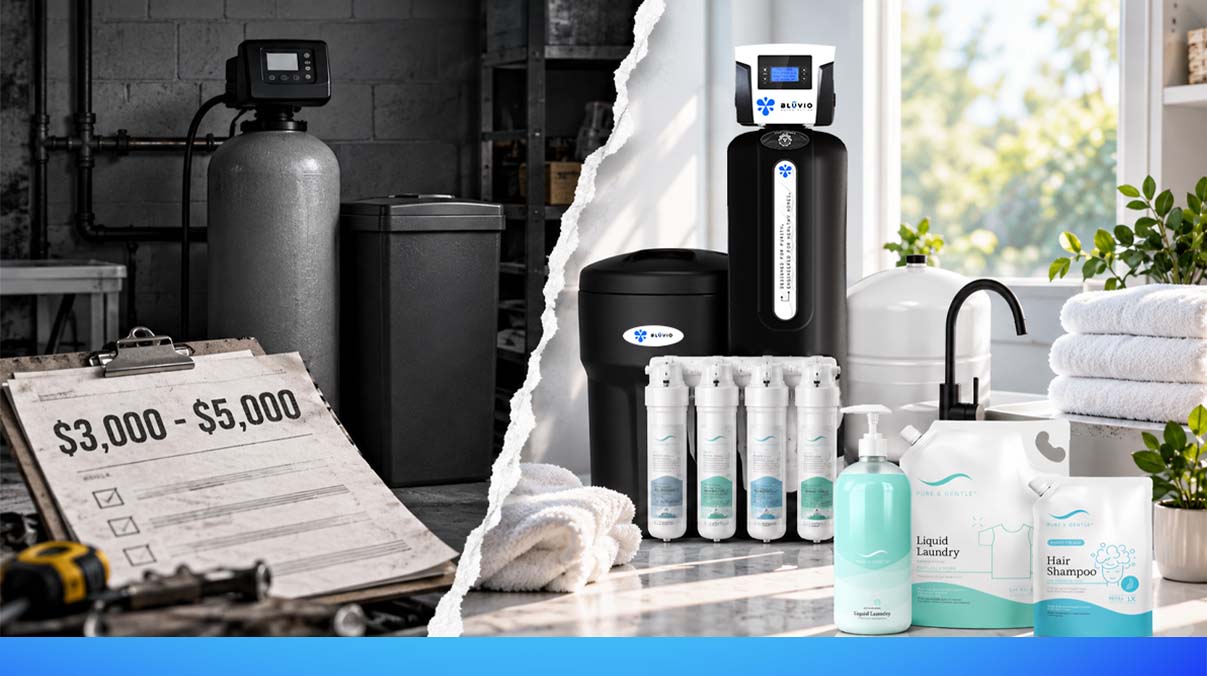
The true cost of ownership includes what you’ll spend maintaining, repairing, and replacing the system over the next 10 to 20+ years.
It’s easy to compare systems based on the sticker price. But what most homeowners miss is the true cost of ownership — not just what you pay today, but what you’ll pay to maintain, replace, or repair your system over the next 10 to 20+ years.
Here’s the truth:
🔧 Most salt-free “tankless” systems:
- Aren’t built for longevity — many last 5 to 7 years before efficiency drops
- Depend on electronics and sensors that fail faster than mechanical components
- Require media replacements every 2–3 years, often with proprietary parts that can cost $300 to $600 or more depending on the brand — and that’s before labor or service call fees.
- Offer minimal resale or home value benefit
And when they stop working? You’re either paying hundreds to repair it — or replacing the whole thing.
🧱 Bluvio’s Multi-Bed System:
- Includes two tanks in one — a carbon filtration tank + ion-exchange softener
- Uses high-grade catalytic carbon and resin built to last 20–25 years
- American-made with industry-best quality control
- Covered by life-term warranties and local support
It’s not just a water softener. It’s an investment in:
Appliance protection
Lower energy bills
Cleaner plumbing
Better showers, cooking, and daily water use
And peace of mind that you won’t be replacing it again in 10 years
When you spread the cost over the full lifespan, our system often ends up cheaper than “budget” options — especially when those cheaper systems fail early and need replacing.
If you’re comparing prices, compare lifespans too. A system that lasts 5–7 years will cost you more in the long run than a higher quality system designed to perform for 25.
What About the Environment?
This is where salt-free systems gain some points.
This is where salt-free systems gain some points. They don’t discharge salty water into the drain and typically waste less water during regeneration. That said, modern salt-based systems are getting much more efficient — especially high-end units with smart regeneration and high-efficiency brine tanks.
If your area restricts salt-based softeners (California, for example), then a salt-free system may be your only option — just go in with realistic expectations.
Final Word: Which System Makes More Sense?
The choice comes down to what you actually expect the system to do.
True Water Softening
- Actual removal of hardness minerals
- Reliable protection for pipes, water heaters, and dishwashers
- Better-feeling water and less soap waste
- A proven, long-term solution backed by decades of field use
Then a salt-based water softener is the smart choice.
A Salt-Free Alternative
- A low-maintenance, salt-free solution
- And you’re okay with slightly conditioned water that still contains hardness minerals
- And your primary concern is eco-friendliness or space
Then a salt-free system might be sufficient — just know its limitations.
At Bluvio, we exclusively install our whole-home systems engineered for long-term durability and performance — including salt-based softening paired with catalytic carbon filtration for the best of both worlds.
Clean water isn’t a trend. It’s a necessity. Choose what actually works.
YOUR NEXT STEP
🧪 Want to See What’s In Your Water?
If you’re curious about your water quality or concerned about the impact it’s having on your home and family, Bluvio is here to help. Our free in-home water test gives you the answers you need to make informed decisions — including customized filtration recommendations for contaminants like fluoride, lead, PFAS, chlorine, arsenic, nitrates, VOCs, and more.
📍 Serving NC, SC and Southwest VA.
Fill out the form below and we’ll follow up to confirm availability in your area.