Point-of-Use vs Whole-Home Filtration: Why One Without the Other Falls Short
When homeowners start improving their water, the first solution they usually encounter is reverse osmosis (RO).
It makes sense. RO systems are widely known, heavily marketed, and associated with “pure” drinking water.
But what’s rarely explained is this:
An RO system is not designed to operate in isolation.
And without proper upstream filtration, it often works harder than it should—sometimes at the expense of performance, longevity, and cost.
What Point-of-Use Filtration (Like RO) Is Designed to Do
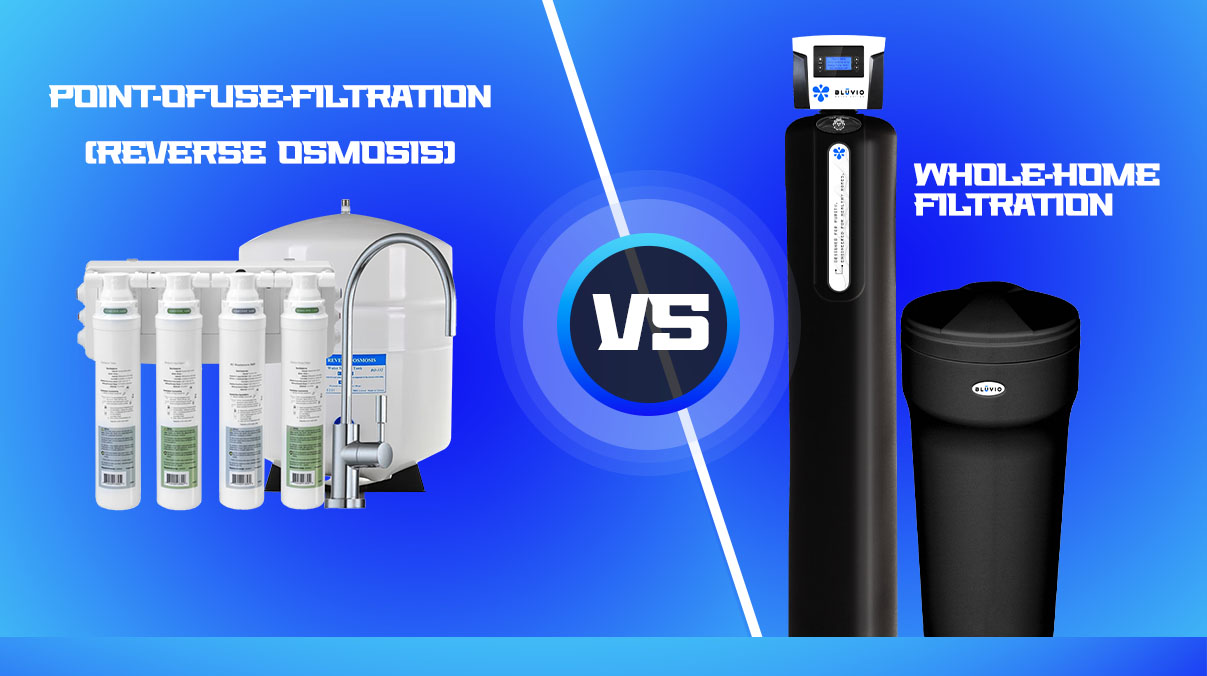
Point-of-use filtration treats water at a single location, typically under a kitchen sink.
Reverse osmosis systems are especially effective at:
-
Reducing dissolved solids
-
Filtering a wide range of contaminants
-
Producing very low-TDS drinking water
Used correctly, RO is an excellent final polishing step for drinking and cooking water.
But it was never intended to handle the full burden of untreated municipal water on its own.
Why RO Membranes Fail Faster Without Whole-Home Filtration
This is where most homeowners—and many installers—miss a critical detail.
RO membranes are sensitive components. They are designed to filter already conditioned water, not raw municipal supply.
When an RO system is installed without upstream whole-home filtration, the membrane is exposed to:
-
Chlorine and chloramines
-
Disinfection byproducts (like TTHMs and HAAs)
-
Excess sediment
-
Hardness minerals
Chlorine and chloramines, in particular, are known membrane oxidizers. Even at regulated levels, prolonged exposure degrades RO membranes more quickly.
The result?
-
Shortened membrane lifespan
-
More frequent replacements
-
Reduced efficiency over time
In other words, the RO system ends up doing work it was never meant to do.
What Whole-Home Filtration Actually Handles
Whole-home filtration treats water before it enters the home, which fundamentally changes everything downstream.
A properly designed whole-home system is responsible for:
-
Removing chlorine and chloramines
-
Reducing disinfection byproducts
-
Filtering sediment and particulates
-
Conditioning hardness minerals
This is not about drinking water alone.
It’s about protecting every system that touches water—including the RO unit itself.
Why Whole-Home Filtration Comes First
Think of whole-home filtration as infrastructure, not a convenience.
It prepares the water so that:
-
Plumbing is protected
-
Appliances last longer
-
Showers and laundry improve
-
And point-of-use systems can operate efficiently
When chlorine and byproducts are removed at the point of entry, the RO membrane is no longer under constant chemical stress.
That’s when RO systems:
-
Last longer
-
Perform more consistently
-
Require less maintenance
This is why, from a systems perspective, whole-home filtration should always precede RO.
What RO Is Best Used For (After Whole-Home Filtration)
Once water has been properly filtered and conditioned at the whole-home level, RO can do what it does best:
-
Final refinement for drinking water
-
Precision filtration at the tap
-
Controlled mineral reintroduction
At this stage, RO becomes a finishing tool, not a frontline defense.
Many modern RO systems also allow for remineralization, restoring beneficial minerals and improving pH after filtration.
This addresses one of the common downsides of RO-only setups: flat taste and overly aggressive water.
Why Remineralization and pH Matter
Ultra-low mineral water isn’t always ideal for daily consumption.
When RO is used properly:
-
Minerals are filtered out intentionally
-
Then selectively added back
-
Creating balanced, stable drinking water
This approach produces:
-
Better taste
-
Higher, more neutral pH
-
A more natural drinking experience
But again, this refinement only makes sense after the water has been treated system-wide.
Why This Is Not an Either-Or Decision
The real misunderstanding isn’t “RO vs whole-home.”
It’s sequence and purpose.
-
Whole-home filtration addresses how water behaves everywhere
-
RO refines what you drink
When RO is installed without whole-home filtration, it’s forced into a role it wasn’t designed for.
When both are used together, each system does its job—and does it better.
The Bigger Picture
Most water quality issues don’t show up only at the kitchen sink.
They show up in:
-
Showers
-
Plumbing
-
Appliances
-
Skin and hair
-
Long-term system wear
That’s why starting with whole-home filtration creates a foundation—one that allows point-of-use systems to operate efficiently instead of defensively.
The Takeaway
Reverse osmosis is a powerful tool—but it is not a standalone solution.
Whole-home filtration removes chlorine, chloramines, and byproducts before they can damage plumbing, appliances, or RO membranes.
RO then steps in as the final refinement, delivering clean, balanced, remineralized drinking water with a higher, more stable pH.
That sequence isn’t about upselling.
It’s about how water systems actually work.
And understanding that difference is what leads to better outcomes—not just cleaner water.