For most homeowners, water quality is judged with one quick glance.
If it’s clear, it must be clean.
No cloudiness. No sediment. No obvious smell.
But visual clarity is one of the least reliable indicators of what’s actually in drinking water.
Clean-looking water can still contain substances that affect taste, plumbing, long-term exposure, and household systems — all without changing how the water looks.
Clear water tells you what you can see. It doesn’t tell you what’s dissolved in it.
Where the Assumption Comes From
Our eyes are useful. They’re just not particularly good water-testing equipment.
Human intuition relies heavily on sight.
We associate danger with murkiness and contamination with discoloration. That instinct works well in nature — but it breaks down when applied to modern drinking water.
Most substances regulated in drinking water today are:
Colorless
They may be present without changing the appearance of the water.
Odorless
They may provide no obvious smell that alerts you to their presence.
Present at very low concentrations
Which means they don’t announce themselves visually.
What Makes Water Look Clear
Clarity is a physical observation. Water quality is a much bigger conversation.
Water clarity simply means there are no visible particles suspended in it.
What You Can See
- There’s little to no sediment
- Large particulates have been removed
- The water has been filtered enough to appear transparent
What You Can’t See
- What’s dissolved in the water
- What chemicals are present
- How water behaves once heated or used
Clear water is a physical observation — not a chemical assessment.
Dissolved Substances Don’t Affect Appearance
Many substances can be present in water without producing sediment, cloudiness, or discoloration.
Many of the most discussed drinking water substances exist in a dissolved state.
This includes:
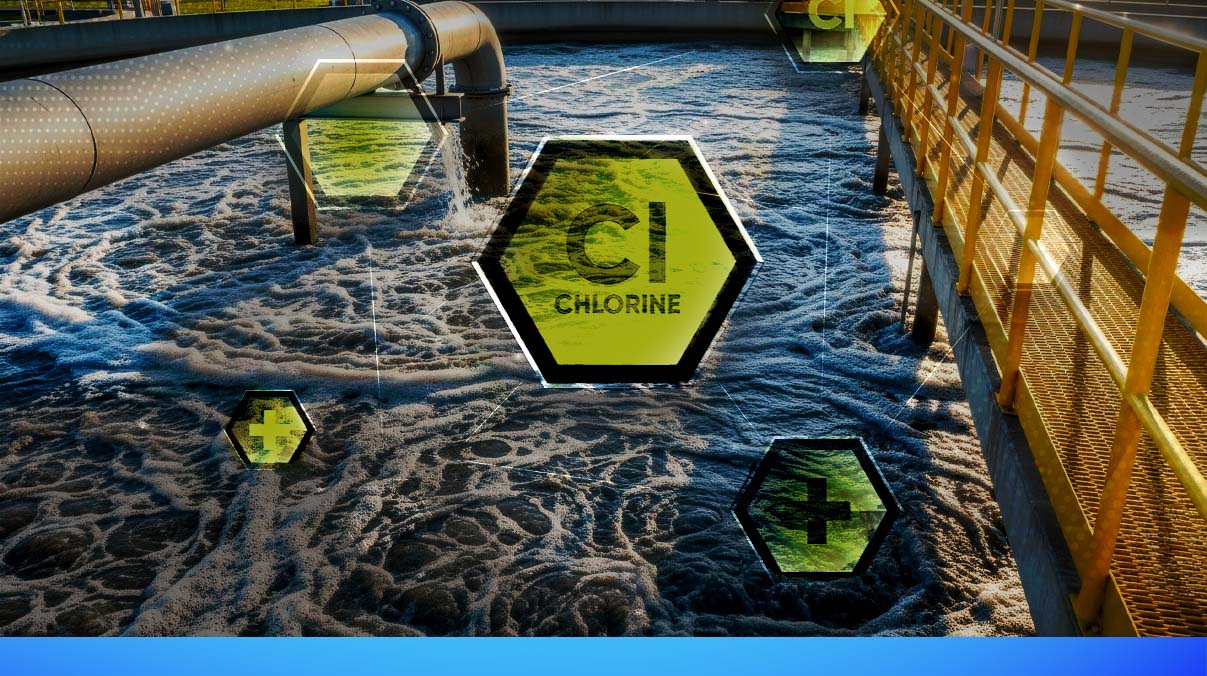
- Disinfectants like chlorine or chloramines
- Disinfection byproducts
- Naturally occurring minerals
- Trace contaminants regulated at parts-per-billion levels
Because these substances dissolve completely, they don’t scatter light or create cloudiness.
The water can look pristine while still carrying measurable compounds.
Why Taste and Smell Aren’t Reliable Either
If you can’t see it, maybe you can taste or smell it. Unfortunately, that isn’t a dependable test either.
Some homeowners rely on taste or smell instead of sight.
While those senses can sometimes detect disinfectants, they’re inconsistent indicators.
Many substances:
Have no taste
Some substances may not be noticeable by taste at regulated levels.
Change when heated
Some characteristics become more noticeable only when the water is heated.
Can vary over time
What you notice may change depending on time of day or water usage.
Absence of taste or odor doesn’t guarantee absence of content.
How Heating and Usage Reveal What Sight Can’t
Sometimes the evidence doesn’t appear in the glass. It appears after the water has been used.
Water chemistry often becomes more noticeable during use.
- Heating water can intensify odors
- Evaporation leaves behind mineral residue
- Soap reacts differently depending on water composition
- Scale forms over time even if water looks clear
These effects are cumulative, not immediate — which is why many water-related issues go unnoticed at first.
The Role of Regulation in This Misunderstanding
Drinking-water standards and your experience with water inside the home aren’t measuring exactly the same thing.
Drinking water regulations focus on safety thresholds, not sensory experience.
That means:
Meet standards
Water can meet applicable drinking-water standards.
Look completely normal
The same water can appear clear and ordinary at the tap.
Behave differently
Its characteristics can still become noticeable during everyday household use.
Regulation ensures population-wide safety, not individual optimization.
This distinction is important — and often overlooked.
Why Visual Clarity Persists as a Myth
“Looks clean” is an incredibly easy shortcut for the brain to make.
The idea that “clear equals clean” persists because:
It feels intuitive
Clear water naturally looks cleaner to us.
Appearance reinforces it
Nothing visible gives us an immediate reason to question the assumption.
There’s no immediate feedback loop
Many water characteristics reveal themselves gradually rather than instantly.
Unlike spoiled food or polluted air, water doesn’t always provide immediate sensory warnings.
Understanding water quality requires information, not instinct.
The Bigger Picture
What you see at the tap is only one small piece of the water-quality picture.
There’s nothing large enough to see.
It tells you nothing about chemical composition, dissolved substances, or how water behaves once it’s heated, pressurized, or used repeatedly throughout a home.
Many of the substances regulated in drinking water exist at levels that are invisible, odorless, and undetectable by taste. That’s why appearance alone has never been a reliable indicator of water quality.
Understanding why clear water isn’t always clean requires understanding what’s really in your drinking water — not just how it looks at the tap.
THE TAKEAWAY
Clear Doesn’t Tell the Whole Story
Clear water can still contain disinfectants, byproducts, minerals, and trace contaminants — all while looking perfectly clean.
Understanding drinking water means looking beyond what you can see and recognizing the difference between appearance and composition.
Clarity is reassuring.
Context is informative.
And context is what leads to informed decisions.